Archive for April 2026

CO-MORBIDITY RISK REDUCTION

Education is the key.

Set habits into place.

Walk your talk.

Lower your sugar, salt and fat intake.

Avoid triggers like alcohol and smoking.

Increase immune boosters to reduce inflammation by encouraging mitochondria to produce oxygen and reduce free radicles. Free radicals are highly reactive, unstable atoms or molecules with unpaired electrons created by metabolism or external factors like pollution and smoking. They damage cells, proteins, and DNA through oxidative stress, contributing to aging and diseases like cancer. Antioxidants stabilize them by donating electrons thus preventing damage. To minimize excessive free radical damage, health professionals often recommend diets high in antioxidants (such as vitamins C and E, found in fruits and vegetables).

ICAO Aviation Climate Week 2026

Aviation connects the world, enabling trade and human connection, which plays a key role in socio-economic development. 

Yet with that extraordinary reach comes an extraordinary responsibility: to ensure that the skies we rely on today do not come at the cost of the planet we leave for tomorrow.

The aviation sector has adopted several ambitious global aspirational goals: 

▪️carbon neutral growth 2020; 

▪️a Long-Term Aspirational Goal (LTAG) of net-zero carbon emissions by 2050; and 

▪️a global aspirational Vision of 5% CO₂ emission reduction by 2030 using aviation cleaner energies. 

Important progress has been made, with the implementation status and results being tracked transparently by ICAO, including through the Stocktaking Events, which are now part of the ICAO Aviation Climate Weeks. 

Progress is being made, but the pace must accelerate, and the ambition must grow.
It is in this spirit that ICAO is proud to convene the ICAO Aviation Climate Week 2026, under the theme

One Global Path: Advancing Net-Zero Aviation taking place from 2 to 4 June 2026 at ICAO Headquarters in Montréal, Canada. 

FODMAP diet

A Low-FODMAP diet is often used to manage symptoms like bloating, gas, and abdominal pain associated with Irritable Bowel Syndrome (IBS).

The diet involves avoiding certain fermentable carbohydrates (FODMAPs) that the small intestine has trouble absorbing

FODMAP stands for Fermentable Oligosaccharides, Disaccharides, Monosaccharides, and Polyols. These are short-chain carbohydrates that are poorly absorbed in the small intestine, leading to rapid fermentation by bacteria in the gut, causing significant discomfort for people with sensitive guts.

  1. Elimination (2–6 weeks): Remove all high-FODMAP foods from the diet.
  2. Reintroduction (6–8 weeks): Gradually reintroduce specific FODMAP foods to identify which ones cause symptoms.
  3. Personalization (Long-term): Maintain a sustainable diet that only restricts trigger foods, allowing maximum variety. 

Common High-FODMAP Foods to Avoid

  • Vegetables: Garlic, onions, asparagus, artichokes, mushrooms, cauliflower.
  • Fruits: Apples, pears, peaches, cherries, plums, watermelon, dried fruit.
  • Dairy: Milk, yogurt, soft cheeses (containing lactose).
  • Grains/Legumes: Wheat, rye, barley, beans, lentils.
  • Sweeteners: High fructose corn syrup, honey, sorbitol, xylitol.

Low-FODMAP Alternatives to Eat

  • Proteins: Beef, pork, chicken, fish, eggs, and firm tofu.
  • Vegetables: Carrots, cucumbers, lettuce, spinach, zucchini, green beans, potatoes.
  • Fruits: Blueberries, strawberries, bananas (firm), oranges, grapes, kiwi.
  • Grains: Rice, oats, quinoa, gluten-free pasta, sourdough bread.
  • Dairy/Alternatives: Lactose-free milk/yogurt, cheddar/brie cheese, almond milk. 

Key Considerations

  • Not a permanent diet: The elimination phase is not intended for long-term use as it can be too restrictive.
  • Work with a professional: A registered dietitian is highly recommended to guide the elimination and reintroduction process.
  • Efficacy: About 75% of people with IBS experience relief from this diet. 

SA begins rollout of HIV-prevention injection Lenacapavir

provides up to 100% efficacy through a bi-annual injection.

Lenacapavir SA prepares for HIV prevention injections rollout.

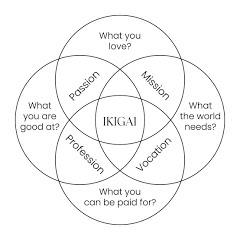
Ikigai  ” a reason for being” ~ Japanese concept

“A reason to wake up in the morning,” representing the intersection of passion, mission, vocation, and profession. 

It combines iki (life) and gai (value/worth) to define what makes life worth living, encompassing joy, purpose, and daily fulfillment. 

It is that quiet conviction that wakes you up in the morning. 

That inner compass that refuses to let you drift through life without meaning. 

Ikigai rests on 4 profound truths. Core pillars:

1) What you love: 

Your passions and interests.

2) What you are good at: 

Your skills and vocation.

3) What the world needs: 

Your mission and contribution.

4) What you can be paid for: 

Your profession. 

When these 4 intersect, 

purpose is born.

Key Components of Ikigai

Often visualized as a Venn diagram, ikigai is found at the intersection.

Usage Examples of Ikigai

Personal Reflection: Identifying activities (hobbies) or people (family/friends) that bring joy and a sense of value.

Career Alignment: Shifting from just working to finding a “career with purpose” that connects personal passion to professional work.

Long-Term Well-being: Maintaining an active, purposeful mind in old age to improve mental and physical longevity.

Craftsmanship: Dedicating oneself to mastering a skill to serve the community, as seen in traditional Japanese artisans. 

Synonyms and Similar Concepts

Raison d’être: French for “reason for being”.

Life Purpose: The central motivation of one’s life.

Calling/Passion: A strong inclination toward a particular activity.

Motivation/Drive: The force that keeps one moving forward. 

Key Takeaway

Ikigai is not strictly about work, but rather about creating harmony between what you love and what you can contribute to the world to bring value to your daily existence. 

Next Stop: The Moon! Artemis II Crew

​History in the making! The four astronauts heading back to the Moon. The Artemis generation is here.

🚀 The Artemis II astronauts are scheduled to splash down off the coast of San Diego at approximately 8:07 p.m. EDT on Friday, April 10.
[2:07 a.m. SAST on Saturday, April 11, in South Africa.]

Four astronauts — three from NASA and one from the CSA (Canadian Space Agency) — make up the Artemis II crew:

NASA astronaut Reid Wiseman, Artemis II commander

NASA astronaut Victor Glover, Artemis II pilot

NASA astronaut Christina Koch, Artemis II mission specialist

Canadian Space Agency (CSA) astronaut Jeremy Hansen, Artemis II mission specialist

New Cholesterol Guidelines 2026

Here’s some exciting news for your heart: The rules around cholesterol just got simpler, smarter and more personalized with an earlier start on primary prevention. 

 American College of Cardiology and American Heart Association released updated cholesterol guidelines that could help you prevent heart disease decades before it starts by giving you clearer, easier-to-understand targets to work toward. 

Break down the biggest changes and what they could mean for your health. 

What is cholesterol? 

Cholesterol is a waxy, fat-like substance that your body uses to make cell membranes, hormones, vitamin D and bile acids. Your liver makes all the cholesterol you need. The issue is not that cholesterol exists; it is that too much atherogenic cholesterol, especially ‘bad’ LDL cholesterol, can build up in artery walls and raise the risk of heart attack and stroke. 

[‘Good’] HDL helps carry cholesterol back to the liver.

The new 2026 cholesterol guidelines

Earlier risk assessment age

Adults in their 30s and up are now included in the risk assessment group rather than adults 40 and up. The new guidelines expand risk assessment to adults ages 30 to 79 and consider both short and long-term risk.

What does it mean? 

Younger people will be screened for cholesterol issues, and screenings may happen even more often for those with risk factors like family history, high blood pressure, autoimmune disease or pregnancy complications such as preeclampsia.

More focus on lifetime prevention

The new guidelines recognize that heart disease doesn’t develop overnight. It takes decades to develop. Instead of waiting until risk is high later in life, doctors are now looking at long-term [30-year] risk, not just 10-year risk, and are paying closer attention to people who have a high LDL when young or a strong family history of heart disease.

What does it mean? 

This shift may lead to earlier lifestyle changes and, for some people, the use of medications so that plaque buildup is prevented long before a heart attack occurs.

Clearer LDL cholesterol targets

The updated guidelines bring back specific LDL cholesterol goals, which were less emphasized in the 2018 recommendations. 

 For people at low risk of heart disease, LDL should be under 100 mg/dL, while those at higher risk may be advised to aim for under 70 md/dL and those at very high risk for under 55 mg/dL.

What does it mean? The updated approach is simpler. Since patients will know their target LDL number and whether they are on track, some patients may be advised to aim for lower LDL levels than they were previously told, especially if they have a history of heart disease, diabetes, kidney disease or strong family risk.

A new focus on Lp(a) testing

The new cholesterol guidelines highlight lipoprotein(a), or Lp(a), as an important risk marker and recommend one-time testing in adulthood.

Lp(a) is a particle in the blood that looks a bit like LDL. It is mostly genetics. [Being] born with high Lp(a) can significantly increase your risk of heart attack, stroke and aortic valve disease.

What does it mean? 

It can uncover a hidden risk if the rest of your cholesterol panel looks okay. If the Lp(a) is high, your doctor may take a more proactive approach and recommend additional testing.

The bottom line on the new cholesterol guidelines

The more we learn about how the body works, the better we get at protecting it. These updated guidelines give you clearer cholesterol targets, earlier screening options and a smarter roadmap to keep your heart healthy for decades to come.

RESILIENCE

1- Self-Awareness

  • Recognize your emotions during challenging situations.
  • Understand personal strengths and areas for growth.
  • Reflect on past experiences to gain valuable insight.
  • Notice how stress affects your thoughts and actions.
  • Use awareness to guide better responses to adversity.
    Quote: “Knowing yourself is the beginning of all wisdom.” – Aristotle

2 – Emotional Regulation

  • Manage strong emotions during stressful moments.
  • Pause before reacting to difficult situations.
    Maintain calm thinking when facing pressure.
  • Practice patience when emotions feel overwhelming.
    Choose thoughtful responses instead of impulsive reactions.
    Quote: “Feelings are just visitors. Let them come and go.” – Mooji

3 – Optimistic Thinking

  • Focus on possibilities instead of limitations.
  • Maintain hope even during uncertain circumstances.
  • View challenges as temporary obstacles.
  • Look for lessons in difficult experiences.
  • Believe that effort can improve future outcomes.
    Quote: “Optimism is the faith that leads to achievement.” – Helen Keller

4 = Problem-Solving Skills

  • Break complex challenges into manageable steps.
    O Evaluate different options before making decisions.
  • Stay focused on solutions instead of obstacles.
    Learn from mistakes and adjust strategies.
  • Take practical actions to improve situations.
    Quote: “We cannot solve our problems with the same thinking we used when we created them.” –
    Albert Einstein

5 – Strong Support Systems

  • Build relationships with people who encourage growth.
    Seek advice from trusted mentors or friends.
  • Share struggles instead of facing them alone.
  • Offer support to others when they need help.
    Community strengthens resilience during difficult times.
    Quote: “Alone we can do so little; together we can do so much.” – Helen Keller

6- Adaptability
Adjust your plans when circumstances change
unexpectedly.
Stay flexible during uncertain or difficult times.

  • Learn new skills when facing unfamiliar challenges.
  • Accept change as part of personal growth.
  • Adapt quickly to overcome obstacles effectively.
    Quote: “It is not the strongest that survive, but the most adaptable to change.” – Charles Darwin (attributed)

7 – Purpose and Meaning
Connect your efforts to meaningful goals.

  • Let purpose guide you during difficult moments.
  • Remember why your work and growth matter.
    Use purpose as motivation to keep going.
  • Meaning strengthens resilience during adversity.
    Quote: “He who has a why to live can bear almost any how.” – Friedrich Nietzsche

css.php