Mediterranean Diet Microbiome benefits

  • A new study explored the impact of a Mediterranean on our microbiome – or gut bacteria.
  • It suggests that a Mediterranean can make changes to our microbiome that are linked to improvements to cognitive function and memory and immunity and bone strength.
  • In ageing society, these could be important health benefits. 

As our global population is projected to live longer than ever before, it’s important that we find ways of helping people live healthier for longer. 

Exercise and diet are often cited as the best ways of maintaining good health well into our twilight years. But recently, research has also started to look at the role our gut – specifically our microbiome – plays in how we age.

Our latest study has found that a Mediterranean diet causes microbiome changes linked to improvements in cognitive function and memory, immunity and bone strength.

The gut microbiome is a complex community of trillions of microbes that live semi-permanently in the intestines. 

These microbes have co-evolved with humans and other animals to break down dietary ingredients such as inulinarabinoxylan and resistant starch, that the person can’t digest. 

They also help prevent disease-causing bacteria from growing.

However, the gut microbiome is extremely sensitive, and many things including diet, the medications you take, your genetics, and even conditions like inflammatory bowel disease and irritable bowel syndrome, can all change the gut microbiota community

The gut microbiota plays a such a huge role in our body, it’s even linked to behavioural changes, including anxiety and depression

But as for other microbiome-related diseases such as type 2 diabetes and obesity, changes in the microbiome are only part of the issue – the person’s genetics and bad lifestyle are major contributing factors.

Since our everyday diets have such a big affect on the gut microbiome, our team was curious to see if it can be used to promote healthy ageing. 

We looked at a total of 612 people aged 65-79, from the UK, France, the Netherlands, Italy and Poland.

We asked half of them to change their normal diet to a Mediterranean diet for a full year. This involved eating more vegetables, legumes, fruits, nuts, olive oil and fish, and eating less red meat, dairy products and saturated fats. The other half of participants stuck to their usual diet.

We initially found that those who followed the Mediterranean diet had better cognitive function and memory, less inflammation, and better bone strength. 

However, what we really wanted to know was whether or not the microbiome was involved in these changes.

Interestingly, but not surprisingly, a person’s baseline microbiome (the species and number of microbes they had living in their gut before the study started) varied by country. 

This baseline microbiome is likely a reflection of the diet they usually ate, alongside where they lived. 

We found that participants who followed the Mediterranean diet had a small but insignificant change in their microbiome diversity – meaning there was only a slight increase in the overall number and variety of species present.

However, when we compared how strictly a person followed the diet with their baseline microbiome data and their microbiome after following the diet, we were able to identify two different gut microbe groups: diet-positive microbes that increased on the Mediterranean diet, and diet-negative microbes whose abundance was reduced while following the diet.

Diet-positive microbes are microbes that flourished in the Mediterranean diet. 

Diet-negative microbes either couldn’t metabolise the diet, or they were were unable to compete with diet-positive microbes. 

These diet-positive microbes were linked with less frailty and inflammation in the body, and higher levels of cognitive function. Losing the diet-negative microbes was also associated with the same health improvements.

When we compared the changes in the number of these microbes in the treatment group (those on the Mediterranean diet) and the control group (those following their regular diet), we saw that the people who strictly followed the Mediterranean diet increased these diet-positive microbes. 

Although the changes were small, these finding were consistent across all five countries – and small changes in one year can make for big effects in the longer term.

Many of the participants were also pre-frail (meaning their bone strength and density would start decreasing) at the beginning of the study. 

We found the group who followed their regular diet became frailer over the course of the one-year study. 

However, those that followed the Mediterranean diet were less frail.

The link between frailty, inflammation, and cognitive function, to changes in the microbiome was stronger than the link between these measures and dietary changes. 

This suggests that the diet alone wasn’t enough to improve these three markers. 

Rather, the microbiome had to change too – and the diet caused these changes to the microbiome.

These types of studies are challenging and expensive, and the microbiome dataset is often difficult to analyse because there are many more data-points to study than there are people in the study. 

Our findings here were possible because of the large group sizes, and the length of the intervention.

However, we recognise that following a Mediterranean diet isn’t necessarily doable for everybody who starts thinking about ageing, usually around the age of 50. 

Future studies will need to focus on what key ingredients in a Mediterranean diet were responsible for these positive microbiome changes. 

But in the meantime, it’s clear that the more you can stick to a Mediterranean diet, the higher your levels of good bacteria linked to healthy ageing will be.

Share Button

‘Blue Zone’ Diet

In the early 2000s, Dan Buettner embarked on a mission to determine what specific aspects of lifestyle and environment help humans live longer. He teamed up with National Geographic and the National Institute of Aging on his quest, and through research, they were able to identify five areas with the highest percentage of centenarians (i.e. a person who is 100 years old or older).

Known as the Blue Zones, these areas also have low rates of chronic diseases including heart disease, diabetes, and cancer. Buettner and his team of anthropologists, epidemiologists, and researchers traveled to these particular areas to study the lifestyle characteristics of the people who lived in these Blue Zones. From there, the “Blue Zone” diet became of interest to help people outside of these locations practice that way of life. Here’s everything you need to know about the Blue Zones, including diet recommendations and more.

What are the five specific locations of the Blue Zones?

  1. Sardinia, Italy: Sardinia is the second-largest island in the Mediterranean Sea and home to some of the world’s longest-living males. The local shepherds walk at least five mountainous miles daily and follow a predominately plant-based diet. Meat is enjoyed on Sundays and special occasions only.
  2. Okinawa, Japan: The world’s longest-living women are from Okinawa, a chain of islands in Japan. Their longevity is suggested to be in part due to their close-knit social circles, as well as an old Confucian mantra said before meals that reminds them to avoid overeating and stop when they are 80% full.
  3. Loma Linda, California: The residents of this city in San Bernardino have one of the highest rates of longevity in America. The community of Seven-Day Adventists in Loma Linda follow a primarily vegan diet and also recognize their Sabbath day weekly.
  4. Nicoya, Costa Rica: The Nicoya Peninsula is known for elders with a positive outlook on life. Their diet is abundant in tropical fruits packed with antioxidants, and their water is rich in calcium and magnesium that helps to prevent heart disease and builds strong bones.
  5. Ikaria, Greece: This island in Greece is known for the long-living locals who embrace a Mediterranean diet abundant in olive oil, fruits, vegetables, whole grains, and beans. Ikarians also take time for a mid-afternoon break. They experience half the rate of heart disease and 20% less cancer than Americans do. Additionally, most Ikarians are Greek Orthodox Christians that follow several periods of fasting throughout the year where they essentially follow a vegan diet.

What habits contribute to the Blue Zone lifestyle?

Although the Blue Zones are all over the world, they share quite a few commonalities. After studying the Blue Zone populations, Buettner and his team narrowed down nine evidence-based common denominators among all of the world’s centenarians. Known as the “Power 9,” these factors are said to be the most influential in promoting longevity in these Blue Zone groups.

  1. Move naturally: Centenarians don’t run marathons or frequent the heavy lifting section of the gym. Instead, they are just constantly active throughout the day by tending to their gardens, cooking, doing house work, and walking. Research on Sardinian men specifically found that residing in mountainous areas, walking longer distances to work, and shepherding are linked to their longevity.
  2. Purpose: Blue Zone natives have a keen sense of purpose which motivates them in every day life. Ikigai and plan de vida are phrases from the Okinawans and Nicoyans, respectively, and both translate to, “why I wake up in the morning.”
  3. Downshift: Stress is inevitable wherever you live, but centenarians take time each day to de-stress whether it’s praying, taking a nap, or enjoying a glass of wine. 
  4. Eighty percent rule: The Okinawan phrase hara hachi bu is said before meals to remind Okinawans to stop eating when they are 80% full. This plays a role in weight management as well and fighting off obesity. 
  5. Plant slant: Fresh produce, especially homegrown, and beans are the cornerstones of most diets of Blue Zone people. On average, meat is only eaten five times per month in the Blue Zone regions.
  6. Wine: Most Blue Zone people, except Adventists, drink 1 to 2 glasses of alcohol per day with friends or at a meal. Sardinian Cannonau wine, made from Grenache grapes, specifically has significantly more healthy flavonoids than other wines. Tea is also sipped daily throughout the Blue Zone regions, but beverages like soft drinks are practically unknown.
  7. Faith: The vast majority of Blue Zone people belong to a faith-based community and attend faith-based services regularly.
  8. Family: Centenarians put family first and are all about keeping the family close. They commit to a life partner and take time to build memories with their children. 
  9. Social networks: Friendship and close social circles support healthy behaviors in the Blue Zone regions. Okinawans in particular have created something called moais, which are groups of five friends that are committed to each other for life.

What is the ‘Blue Zone’ diet and how does it work?

Research suggests that a strong mechanism behind the longevity and reduction of chronic disease in Blue Zone people is the anti-inflammatory benefits of their dietary choices. While these centenarians aren’t necessarily completely vegan, their diets do have a predominant focus on plants.


How to Start a Mediterranean Diet

Vegetables, especially homegrown, are a huge emphasis for Blue Zone people and provide a ton of vitamins, minerals, fiber, and antioxidant benefits. Beans and lentils are strong plant-based sources of protein in these populations. Similarly to vegetables, legumes also provide a ton of fiber which has benefits ranging from reducing risk of cardiovascular disease to helping control blood sugar levels. Healthy fats, such as olive oil, are used in several of the Blue Zone regions and provide a slew of heart-healthy fatty acids and antioxidants.

Blue zone people limit their consumption of red meat, and even only enjoy small portions of fish about three times per week. These populations do still indulge in moderation regarding sweets and other foods, but they eat sensibly and don’t overindulge. By maintaining moderation and balance with food choices, especially following rules such as the Okinawans do with the hara hachi bu principle, weight stays controlled and obesity is not as prevalent to fuel chronic disease.

Blue Zone diet food list:

Based on the “Power 9” principle of plant slant that the Blue Zone regions embrace, we’ve put together a food list that can help you get started on eating the Blue Zone way.

Produce

  • Fruit: apples, bananas, berries, grapes, oranges, papaya, pineapple, plums, watermelon, etc
  • Vegetables: bell peppers, beets, broccoli, carrots, cauliflower, chard, collard greens, cucumber, garlic, green beans, kale, onions, potatoes, spinach, tomatoes, etc.

Protein

  • Beans & legumes: black beans, chickpeas, kidney beans, lentils, etc.
  • Eggs (up to two to four times per week)
  • Fish (up to three small servings a week): anchovies, salmon, cod, swordfish, tuna, sardines, etc.
  • Goat milk and goat-based dairy products
  • Nuts: almonds, Brazil nuts, cashews, peanuts, walnuts, etc.
  • Seeds: pumpkin seeds, chia seeds, flax seeds, hemp seeds, etc.
  • Tofu, extra-firm

Grains & Pantry Staples

  • Barley
  • Brown Rice
  • Coffee
  • Dried spices and fresh herbs
  • Oatmeal, preferably steel-cut
  • Olive oil
  • Quinoa
  • Red wine
  • Tea
  • 100% Whole wheat, sprouted grain bread, and sourdough bread
Share Button

COVID-19 and PCR Testing


What is a COVID-19 PCR test?

The polymerase chain reaction (PCR) test for COVID-19 is a molecular test that analyzes your upper respiratory specimen, looking for genetic material (ribonucleic acid or RNA) of SARS-CoV-2, the virus that causes COVID-19. Scientists use the PCR technology to amplify small amounts of RNA from specimens into deoxyribonucleic acid (DNA), which is replicated until SARS-CoV-2 is detectable if present. The PCR test has been the gold standard test for diagnosing COVID-19 since authorized for use in February 2020. It’s accurate and reliable.

Who should get tested for COVID-19?

Your healthcare provider may recommend testing for COVID-19 if you have any of the following symptoms:

  • Fever or chills.
  • Cough.
  • Shortness of breath or difficulty breathing.
  • Fatigue.
  • Muscle or body aches.
  • Headache.
  • New loss of taste or smell.
  • Sore throat.
  • Congestion or runny nose.
  • Nausea or vomiting.
  • Diarrhea.

Not everyone with COVID-19 develops symptoms. And not all symptomatic people develop all of the symptoms listed above. Please check with your healthcare provider if you’re feeling unwell during the COVID-19 pandemic — even if you’ve been vaccinated.

TEST DETAILS

There are three key steps to the COVID-19 PCR test:

  1. Sample collection: A healthcare provider uses a swab to collect respiratory material found in your nose. A swab is a soft tip on a long, flexible stick that goes into your nose. There are different types of nose swabs, including nasal swabs that collect a sample immediately inside your nostrils and nasopharyngeal swabs that go further into the nasal cavity for collection. Either type of swab is sufficient for collecting material for the COVID-19 PCR test. After collection, the swab is sealed in a tube and then sent to a laboratory.
  2. Extraction: When a laboratory scientist receives the sample, they isolate (extract) genetic material from the rest of the material in the sample.
  3. PCR: The PCR step then uses special chemicals and enzymes and a PCR machine called a thermal cycler. Each heating and cooling cycle increases (amplifies) the amount of the targeted genetic material in the test tube. After many cycles, millions of copies of a small portion of the SARS-CoV-2 virus’s genetic material are present in the test tube. One of the chemicals in the tube produces a fluorescent light if SARS-CoV-2 is present in the sample. Once amplified enough, the PCR machine can detect this signal. Scientists use special software to interpret the signal as a positive test result.

RESULTS AND FOLLOW-UP

What do COVID-19 PCR test results mean?

positive test result means that it’s likely that you have an infection with SARS-CoV-2. This could be due to asymptomatic infection, but if you have symptoms, then this infection is called COVID-19. Most people have mild illness and can recover safely at home without medical care. Contact your healthcare provider if your symptoms get worse or if you have questions or concerns.

negative test result means you probably didn’t have an infection with SARS-CoV-2 at the time your specimen was collected. However, it’s possible to have COVID-19 but not have the virus detected by the test. For example, this may happen if you recently became infected but you don’t have symptoms yet — or it could happen if you’ve had COVID-19 for more than a week before being tested. A negative test doesn’t mean you are safe for any length of time: You can be exposed to COVID-19 after your test, get infected and spread the SARS-Cov-2 virus to others.

If your test is positive, talk with your healthcare provider, stay home and separate yourself from others. If your test is negative, continue to take steps to protect yourself and others from getting COVID-19.

How long does it take to get coronavirus test results?

You should receive your test results as early as 24 hours after sample collection, but sometimes it can take a few days, depending on how long it takes the sample to reach the laboratory.

How long do you test positive after having had COVID-19?

Because the PCR test is so sensitive, it can detect very small amounts of virus material. This means that the test can continue to detect fragments of SARS-CoV-2 virus even after you’ve recovered from COVID-19 and are no longer contagious. So you may continue to test positive if you’ve had COVID-19 in the distant past, even though you can’t spread the SARS-CoV-2 virus to others.

Prolonged infection in immunocompromised individuals can occur where they shed infectious virus for months. Also, healthy people can become reinfected. If you test positive for SARS-CoV-2 but you think you might have already recovered from COVID-19, please discuss with a healthcare provider.

ADDITIONAL DETAILS

What’s the difference between the PCR and antigen tests for COVID-19?

There are two types of tests for COVID-19: the PCR test and the antigen test.

  • Polymerase chain reaction (PCR). This tests for the presence of the actual virus’s genetic material or its fragments as it breaks down. PCR is the most reliable and accurate test for detecting active infection. PCR tests typically take hours to perform, but some are faster.
  • Antigen test: This detects bits of proteins on the surface of the virus called antigens. Antigen tests typically take only 15 to 30 minutes. Rapid antigen tests are most accurate when used within a few days of the start of your symptoms, which is when the largest amount of virus is present in your body.

Which COVID test is more accurate?

The antigen test is typically faster but is less sensitive than the PCR test. Because the antigen test is not as accurate as PCR, if an antigen test is negative, your healthcare provider could request a PCR test to confirm the negative antigen test result.

Share Button

Covid-19 variant Omicron


The number of confirmed Omicron Covid cases in South Africa is still relatively low, with 2,828 new confirmed cases recorded on Friday, but its speed in infecting young people in the country has alarmed health professionals, the Associated Press reports.

“We’re seeing a marked change in the demographic profile of patients with Covid-19,” Rudo Mathivha, head of the intensive care unit at Soweto’s Baragwanath hospital, told an online press briefing.

“Young people, in their 20s to just over their late 30s, are coming in with moderate to severe disease, some needing intensive care. About 65% are not vaccinated and most of the rest are only half-vaccinated,” said Mathivha.

“I’m worried that as the numbers go up, the public health care facilities will become overwhelmed.”

She said urgent preparations are needed to enable public hospitals to cope with a potential large influx of patients needing intensive care.

Diagnostic tests so far indicate the Omicron variant may be responsible for as many as 90% of the new cases, according to South Africa’s health officials.

Share Button

Covid-19 Vaccine Latest

The U.S. Food and Drug Administration (FDA) issued Emergency Use Authorization (EUA) to Pfizer-BioNTech’s COVID-19 vaccine on Dec. 11. 

The vaccine is given in two doses that are 21 days apart from each other and is reported to be 95% effective at preventing COVID-19.

Pfizer’s vaccine is the first mRNA vaccine that received EUA by the FDA.

What is different about an mRNA vaccine?

Although mRNA vaccines — also known as messenger RNA vaccines — are now being approved for the first time, they have been a topic of study by researchers for decades. 

The difference between mRNA vaccines and more traditional ones comes down to what is contained within the vaccine.

“MRNA vaccines do not contain live virus, so they cannot cause an infection,” Dr. Fryhofer said. “They cannot give someone COVID. MRNA vaccines do not affect or interact with our own DNA in any way. The messenger RNA never enters the nucleus of the cell and it doesn’t hang around. The body breaks it down with hours.”

What’s different about an EUA compared with the normal vaccine approval process?An EUA is different than approval of a vaccine. According to the FDA website, an EUA “is a mechanism to facilitate the availability and use of medical countermeasures, including vaccines, during public health emergencies.” A product can receive EUA if it meets an effectiveness standard and an assessment of its benefit compared with its risk is favorable.

The FDA has been transparent in its review process and expects any manufacturer that receives EUA to continue its clinical trials and eventually pursue official FDA approval, Curtis said.

Pfizer’s COVID-19 vaccine earns FDA nod.

If you’ve already had COVID-19 or received monoclonal antibodies, should you still get the vaccine?

Yes, although people who received monoclonal antibodies or convalescent serum should wait at least 90 days before getting the vaccine.

Should pregnant women get the vaccine?

Pregnant or lactating women may receive the vaccine if they choose, however, safety data is not known about this population at this time. A woman who is pregnant or lactating should consult with her physician about what is best for her and her baby.

Is there anyone who should not get the vaccine?

According to ACIP, people who have a history of allergic reactions to any vaccine should not get vaccinated at this time. There were no signs of allergic reactions during the Pfizer trials, she said, but several people in the United Kingdom had severe allergic reactions to the vaccine earlier in the month.

“The COVID vaccine should not be given in combination with other vaccines right now,” she said. “The study protocol for these vaccines did not allow co-administration with other vaccines, so don’t do it. We want this vaccine to do its best job.”

The Centers for Disease Control and Prevention (CDC) recommends at least a two-week window between getting Pfizer’s COVID-19 vaccine and any other vaccine.

Are there any expected side effects to the vaccine?

As with any vaccine, patients may experience some side effects, and it is important for physicians to make sure their patients understand the side effects, which include pain or swelling at the site of the shot, as well as fever, chills, tiredness or headache. 

The symptoms are usually worse after the second dose, and they’re usually worse in younger as compared to older patients.

Share Button

WELLNESS RETREAT AT HOME TO REFRESH, REVIVE, REJUVENATE THE MIND AND BODY


Seek stunning natural surroundings. Think lush foliage, quiet pools, nearby lakes, hills, etc. These natural environments help you relax and unwind.

DISCONNECT FOR INWARD FOCUS to unplug and recharge. When you unplug, you’re able to focus more on the present, whether it’s eating a delicious meal, getting a massage or going on a walk or hike.

ELIMINATE DISTRACTIONSE to allow you to turn your thoughts inwards. Try meditation, yoga or try another mindfulness practice. Sit in a quiet spot and just look at the sky. Having free time lets you really decompress and reconnect to what it is you really want.

“You control your Thoughts, which control your Feelings, determine your Actions, then dictate and control your Events

CLEANSE Try a detoxifying meal plan, packed with nutrient-rich vegetable and fruit juices, raw foods, fresh wheatgrass and essential oils to quickly cleanse the body of unwanted toxins and restore vital nutrients, reclaiming energy and enhanced mental processing.

REVITALIZE You will have time and energy for everything from fitness classes (zoom) to long walks, hikes, massages to swims.

MAKE NEW PATTERNS Include aerobic exercise into your daily routine, learning how to prepare raw foods, or creating a sustainable meal plan that fits your lifestyle.

Share Button

COVID19 VACCINE

Development usually takes around five years. Once you pick a disease to target, you have to create the vaccine and test it on animals. Then you begin testing for safety and efficacy in humans.

Safety and efficacy are the two most important goals for every vaccine. Safety is exactly what it sounds like: is the vaccine safe to give to people? Some minor side effects (like a mild fever or injection site pain) can be acceptable, but you don’t want to inoculate people with something that makes them sick.

Efficacy measures how well the vaccine protects you from getting sick. Although you’d ideally want a vaccine to have 100 percent efficacy, many don’t. For example, this year’s flu vaccine is around 45 percent effective.

To test for safety and efficacy, every vaccine goes through three phases of trials:

  • Phase one is the safety trial. A small group of healthy volunteers gets the vaccine candidate. You try out different dosages to create the strongest immune response at the lowest effective dose without serious side effects.
  • Once you’ve settled on a formula, you move onto phase two, which tells you how well the vaccine works in the people who are intended to get it. This time, hundreds of people get the vaccine. This cohort should include people of different ages and health statuses.
  • Then, in phase three, you give it to thousands of people. This is usually the longest phase, because it occurs in what’s called “natural disease conditions.” You introduce it to a large group of people who are likely already at the risk of infection by the target pathogen, and then wait and see if the vaccine reduces how many people get sick.

After the vaccine passes all three trial phases, you start building the factories to manufacture it, and it gets submitted to the WHO and various government agencies for approval.

For COVID-19, financing development is not an issue. Governments and other organizations (including our foundation and an amazing alliance called the Coalition for Epidemic Preparedness Innovations) have made it clear they will support whatever it takes to find a vaccine. 

So, scientists are able to save time by doing several of the development steps at once. For example, the private sector, governments, and our foundation are going to start identifying facilities to manufacture different potential vaccines. If some of those facilities end up going unused, that’s okay. It’s a small price to pay for getting ahead on production.

Fortunately, compressing the trial timeline isn’t the only way to take a process that usually takes five years and get it done in 18 months. 

Another way we’re going to do that is by testing lots of different approaches at the same time.

There are dozens of candidates in the pipeline.

As of April 9, there are 115 different COVID-19 vaccine candidates in the development pipeline.

Share Button

Covid-19 Pandemic

The coronavirus disease (COVID-19) pandemic has created a mass casualty disaster of staggering proportions. By April 2020, the novel coronavirus responsible for COVID-19 had forced many parts of the United States into crisis mode, while others race to prepare for the inevitable. In regions where the case numbers have not yet begun to climb, disaster planning teams have time to prepare for a crisis response and implement lessons learned from those who were impacted earlier. The goal is the greatest good for the greatest number of people, so hospitals and health care systems are turning the focus from individual health to population health in their disaster surge response to save as many lives as possible.    

Mass casualty incidents (MCIs) can be man-made acts of violence, such as mass shootings, bioterrorism, or exploding bridges, or natural disasters in the form of earthquakes, tornados, tsunamis, and pandemics. Tragedies of intentional violence or infrastructure disasters create a sudden surge, demanding a rapid shift in a hospital’s daily routine, and are usually limited geographically—for example, the site of an active shooter or a train derailment. Natural disasters, however, cover much larger regions (i.e., the path of a tornado), whereas, by definition, pandemics know no boundaries.

One key variable in these disasters is time. Time, in most cases, determines our ability to prepare for and maintain a disaster response. In trauma MCIs, there is a window of time when patients arrive to local hospitals, which is often measured in minutes to hours. In the case of bioterrorism or pandemics, timelines are prolonged, measured in days to weeks. Regarding the ongoing COVID-19 pandemic, the window of time is indefinite and unknown. The disruption of a hospital’s daily routine for prolonged periods of time and the need for resources beyond those available, or worse, outstrips the supply chain, placing severe strain on the health care system. Our best tools to manage these challenges are preparation, planning, and practice.  

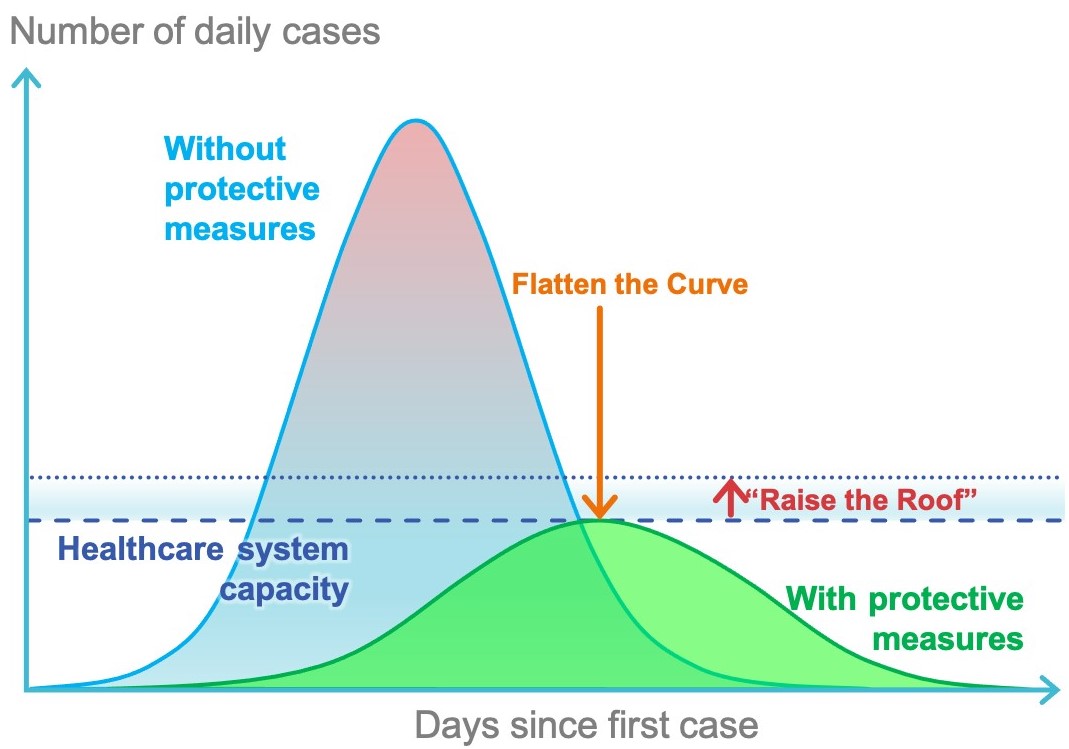
Preparation and planning take place from the federal and state levels to the community and local health care facility levels. Community planning should be coordinated with local governmental agencies, in accordance with state and federal disaster planning efforts, and integrated with local public health and emergency medical services. With respect to pandemics, community strategies must make every effort to “flatten the curve” in order to break the chain of transmission and slow the spread of infections. At the same time, hospital system strategies “raise the roof” of surge response by increasing health care system capacity (Fig. 1) through predesigned efforts focused on three factors: space, staff, and supplies. The hospital system is the backbone of these three elements.  

Figure 1

Community efforts to “flatten the curve” of coronavirus infections often intersect with health care system strategies to “raise the roof” for patient capacity (modified from Disaster Med Public Health Prep with permission from the Society for Disaster Medicine and Public Health).

Strategies for increasing health care system capacity will include conservation and substitution during a conventional response, adaptation and recycling during a contingency response, and, finally, reallocation of resources during a crisis response—essentially, withholding resources from one patient population to use them more effectively on another patient population. These “raise the roof” strategies involve nuanced ethical and legal considerations that must be addressed in advance, authorized by hospital leadership, and communicated clearly to frontline health care workers.

System

Ultimately, the hospital system component directs the response that determines the allocation of the three critical resources of space, staff, and stuff, which are based on supply and demand.

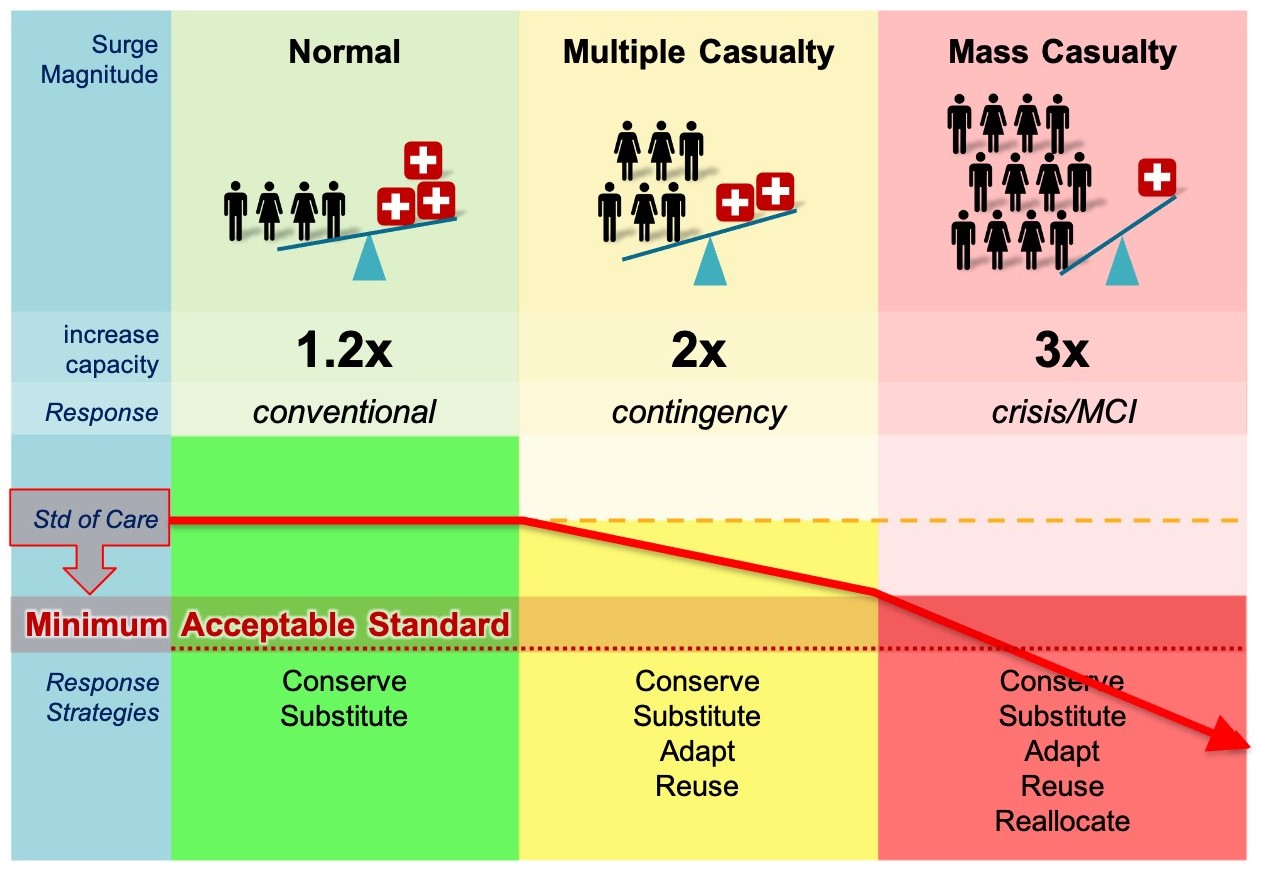
A robust hospital incident command system provides broad management for a multitude of issues, including: hospital controls (facility access, ventilation), communication (internal and external), community coordination (health care facilities, state and federal agencies, as well as utilities and supply chains), and continuity of emergency health care operation (vis-à-vis utility or other system failures). The hospital incident command should also determine and communicate which disaster response is being utilized. Disaster response can be described, in escalating intensity, as conventional, contingency, and crisis, dependent on surge severity and resource availability. The more severe the surge, the fewer the resources; the lower the hospital’s capacity to take care of victims, the more quickly the disaster response must shift into a higher mode (Fig. 2). 

Figure 2

As the hospital incident command system escalates the intensity of disaster response—from conventional to contingency to MCI—the minimum acceptable standard of care for patients is diminished (modified from Disaster Med Public Health Prep with permission from the Society for Disaster Medicine and Public Health).

Space

Upon declaration of an MCI, efforts must be made to free up physical space for patients. The size and nature of the disaster will dictate the scope and speed necessary. 

The conventional response is for surges causing a 20% increase in patients beyond normal capacity. In this situation, all staffed beds are made available and filled. Elective procedures are postponed or cancelled, and patient discharge plans are activated to dedicate more space and empty beds to the surge.

A contingency response is used for surges that are twice a hospital’s capacity and demands more aggressive actions. As the numbers of patients greatly exceed the available hospital and critical care beds, hospital spaces designed for other purposes, including step-down units, observation units, and procedure suites, can be repurposed to recruit more space to bed patients. Transferring patients to other available facilities for ongoing, nonemergent care can be initiated.

A crisis situation completely overwhelms a health care facility. Patients fill hallways, and makeshift spaces, such as tents and offices, need to be devised. Erecting tent hospitals with intensive care units in city parks, converting convention centers into field hospitals, and docking of the United States Naval Ship (USNS) Comfort in Manhattan and USNS Mercy in Los Angeles are evidence that our nation is in crisis because of the COVID-19 pandemic.

Staff

As more space becomes available, achieving appropriate staffing and obtaining adequate supplies for the surge of patients is vital. The hospital incident command system should be convened for action as soon as a disaster is declared to urgently alert and mobilize necessary staff. The type of injuries that are expected (e.g., blunt trauma, penetrating trauma, or biological agent) will determine the type of staff best suited to respond. If staffing levels are insufficient, measures to increase staffing may be warranted, including expanding the scope of responsibilities, lengthening shifts, and enlarging patient-to-nurse ratios.  

In a conventional response, trained and credentialed staff are able to care for patients with minor modifications, while maintaining usual standards of care.

The standard of care is challenged in a contingency response, as adequately trained staff must train and supervise off-service staff to safely provide care. Bringing in additional staff should be considered, and outside staff need to be given emergency privileges and credentialing.     

A crisis response demands staff to perform clinical functions outside their usual domain. Aggressive staff recruitment and rapid training are necessary to meet the patient care demands and volume. During crisis mode, triage becomes necessary to ensure that acceptable care is provided for the largest number of people. Over- and under-triage can result in higher mortality rates. 

Supplies (“Stuff”)

Supplies include medications, medical equipment, and personal protective equipment (PPE). Considerations must also be made for laboratory reagents, diagnostic testing, as well as for food, water, and linens.

The hospital system must be aware of onsite and offsite supply storage and availability through supply chains. The ability to adapt, reuse, and reallocate becomes necessary in both contingency and crisis situations.

In the current COVID-19 pandemic, we are witnessing contingency and crisis responses. Hospitals are experiencing severe shortages of ventilators and PPE, meaning patients may be deprived of life-saving care and health care providers are likely to be infected with dire, cascading ramifications.

Radiology Department Response

A departmental incident command team should be in place to implement a disaster management plan and engage in clear and consistent communication. The radiology department must have containment and mitigation strategies that ensure the safety of all staff and patients being imaged. For COVID-19, these measures include ensuring adequate PPE, especially for frontline technicians performing imaging studies, enforcing physical distancing, and limiting in-person interactions. Remote reading should be instituted, where possible. Decontamination protocols must be defined and executed. Nonemergent studies should be halted, including interventional procedures, to preserve PPE and limit exposure.

All real-time changes to address incident-specific issues should be frequently updated and communicated. Implementing these types of measures allows radiology departments to provide safe and appropriate care during surges and helps to ensure sustainable operations.

The lessons we learn from responses nationally and internationally should be incorporated into our hospital and departmental MCI and disaster planning process. Our ability to plan and prepare by focusing on system, space, staff, and stuff will make all the difference in the number of lives saved.

Share Button

Public use of surgical masks to slow COVID-19


In laboratory experiments, the masks significantly reduced the amounts of various airborne viruses coming from infected patients, measured using the breath-capturing “Gesundheit II machine” developed by Dr Don Milton, a professor of applied environmental health at the University of Maryland and a senior author of the study. Milton has already conferred with federal and White House health officials on the findings, which closely follow statements from the head of the US Centres for Disease Control and Prevention saying the agency was reconsidering oft-stated advice that surgical masks aren’t a useful precaution outside of medical settings. (The debate takes place at a time when clinicians themselves face dangerously inadequate supplies of masks – a shortfall other UMD researchers are scrambling to help solve.)

The question of masks has roiled society as well, with some retailers refusing to let employees wear them for fear of sending negative signals to customers, and cases of slurs and even physical attacks in the US and elsewhere against Asians or Asian Americans who were wearing masks, a measure some consider a necessity during a disease outbreak.

The study, conducted prior to the current pandemic with a student of Milton’s colleagues on the faculty of medicine at the University of Hong Kong, does not address the question of whether surgical masks protect wearers from infection. It does suggest that masks may limit how much the infected – who in the case of the novel coronavirus often don’t have symptoms – spread diseases including influenza, rhinoviruses and coronaviruses. Milton, who runs the Public Health Aerobiology, Virology, and Exhaled Biomarker Laboratory in the School of Public Health, demonstrated in a 2013 study that surgical masks could help limit flu transmission. However, he cautions that the effect may not be as great outside of controlled settings.

Nevertheless, he said, the chance they could help justifies taking a new look at whether all people should be encouraged to wear them when they venture out of their houses to stores or other populated locations during the current COVID-19 lockdown.

“In normal times we’d say that if it wasn’t shown statistically significant or the effective in real-world studies, we don’t recommend it,” he said. “But in the middle of a pandemic, we’re desperate. The thinking is that even if it cuts down transmission a little bit, it’s worth trying.”

Previous studies have shown that coronavirus and other respiratory infections are mostly spread during close contact, which has been interpreted by some infectious disease specialists to mean that the disease could spread only through contact and large droplets, such as from a cough or sneeze – a message that has often been shared with the public.

“What they don’t understand is that is merely a hypothesis,” Milton said. The current study (along with earlier ones) shows, by contrast, that tiny, aerosolized droplets can indeed diffuse through the air. That means it may be possible to contract COVID-19 not only by being coughed on, but by simply inhaling the breath of someone nearby who has it, whether they have symptoms or not. Surgical masks, however, catch a lot of the aerosolized virus as it’s exhaled, he said.

The study was conducted at the University of Hong Kong as part of the dissertation research of the lead author, Dr Nancy Leung, who, under the supervision of the co-senior authors Drs Cowling and Milton, recruited 246 people with suspected respiratory viral infections. Milton’s Gesundheit machine compared how much virus they exhaled with and without a surgical mask.

“In 111 people infected by either coronavirus, influenza virus or rhinovirus, masks reduced detectable virus in respiratory droplets and aerosols for seasonal coronaviruses, and in respiratory droplets for influenza virus,” Leung said. “In contrast, masks did not reduce the emission of rhinoviruses.”

Although the experiment took place before the current pandemic, COVID-19 and seasonal coronaviruses are closely related and may be of similar particle size. The report’s other senior author, Professor Benjamin Cowling, division head of epidemiology and biostatistics, School of Public Health, HKUMed, and co-director of the World Health Organisation Collaborating Centre for Infectious Disease Epidemiology and Control, said, “The ability of surgical masks to reduce seasonal coronavirus in respiratory droplets and aerosols implies that such masks can contribute to slowing the spread of (COVID-19) when worn by infected people.”

Milton pointed to other measures his research has found is even more effective than masks, such as improving ventilation in public places like grocery stores, or installing UV-C lights near the ceiling that works in conjunction with ceiling fans to pull air upwards and destroy viruses and bacteria.

“Personal protective equipment like N95 masks are not our first line of defence,” Milton said. “They are our last desperate thing that we do.” Hong Kong University contributed to this report.

Share Button

Coronaviruses and Acute Respiratory Syndromes (COVID-19, MERS, and SARS)


Coronaviruses are enveloped RNA viruses that cause respiratory illnesses of varying severity from the common cold to fatal pneumonia. 

Numerous coronaviruses, first discovered in domestic poultry in the 1930s, cause respiratory, gastrointestinal, liver, and neurologic diseases in animals. Only 7 coronaviruses are known to cause disease in humans. 

Four of the 7 coronaviruses most frequently cause symptoms of the common cold

Coronaviruses 229E and OC43 cause the common cold; the serotypes NL63 and HUK1 have also been associated with the common cold. 

Rarely, severe lower respiratory tract infections, including pneumonia, can occur, primarily in infants, older people, and the immunocompromised.

Three of the 7 coronaviruses cause much more severe, and sometimes fatal, respiratory infections in humans than other coronaviruses and have caused major outbreaks of deadly pneumonia in the 21st century:


  • SARS-CoV2 is a novel coronavirus identified as the cause of coronavirus disease 2019 (COVID-19) that began in Wuhan, China in late 2019 and spread worldwide.

  • MERS-CoV was identified in 2012 as the cause of Middle East respiratory syndrome (MERS).

  • SARS-CoV was identified in 2002 as the cause of an outbreak of severe acute respiratory syndrome (SARS).

These coronaviruses that cause severe respiratory infections are zoonotic pathogens, which begin in infected animals and are transmitted from animals to people.

COVID-19 is an acute, sometimes severe, respiratory illness caused by a novel coronavirus SARS-CoV2.

COVID-19 was first reported in late 2019 in Wuhan, China and has since spread extensively in China and worldwide. 

Transmission of COVID-19

Early COVID-19 cases were linked to a live animal market in Wuhan, China, suggesting that the virus was initially transmitted from animals to humans. 

Person-to-person spread occurs through contact with infected secretions, mainly via contact with large respiratory droplets, but it could also occur via contact with a surface contaminated by respiratory droplets. 

Researchers are still learning how readily this virus spreads from person to person or how sustainable infection will be in a population, although it appears more transmissible than SARS and spread is probably more similar to that of influenza.

Super-spreaders played an extraordinary role in driving the 2003 SARS outbreak and may also play a significant role in the current COVID-19 outbreak. 

A super-spreader is an individual who transmits an infection to a significantly greater number of other people than the average infected person. 

Quarantine and isolation measures are being applied in an attempt to limit the local, regional, and global spread of this outbreak.

Symptoms and Signs

People with COVID-19 may have few to no symptoms, although some become severely ill and die. Symptoms can include fever, cough, and shortness of breath. 

Those with more severe disease may have lymphopenia and chest imaging findings consistent with pneumonia. 

The exact incubation time is not certain; estimates range from 1 to 14 days. The risk of serious disease and death in COVID-19 cases increases with age.

Symptoms and signs reference


1. Centers for Disease Control and Prevention: Severe Outcomes Among Patients with Coronavirus Disease 2019 (COVID-19) — United States, February 12–March 16, 2020. MMWR Morb Mortal Wkly Rep 69:343-346, 2020. doi: 10.15585/mmwr.mm6912e2external icon.

Diagnosis


Real-time reverse transcriptase-polymerase chain reaction (RT-PCR) testing of upper and lower respiratory secretions.

Diagnostic testing for COVID-19 is being made available to select laboratories authorized by the Federal Drug Administration under an Emergency Use Authorization (EUA). 

Clinicians can also access laboratory testing through public health laboratories in their jurisdictions.

For initial diagnostic testing for COVID-19, the CDC recommends collecting and testing a single upper respiratory nasopharyngeal swab. 

Collection of only oropharyngeal swabs is acceptable if other swabs are not available. 

The CDC also recommends testing lower respiratory tract specimens, if available. 

For patients for whom it is clinically indicated (eg, those receiving invasive mechanical ventilation), a lower respiratory tract aspirate or bronchoalveolar lavage sample should be collected and tested as a lower respiratory tract specimen. 

Collection of oropharyngeal swabs is a lower priority and if collected should be combined in the same tube as the nasopharyngeal swab. 

Collection of sputum should be done only for those patients with productive coughs. Induction of sputum is not recommended. 

Specimens should be collected as soon as possible, regardless of the time of symptom onset. 

Maintain proper infection control when collecting specimens. 

For biosafety reasons, the CDC recommends local institutions do not attempt to isolate the virus in cell culture or do initial characterization of viral agents in patients suspected of having COVID-19 infection.

Because of the increasing availability of test kits in the US, previous restrictions on patient selection for testing are being relaxed, and testing is expanded to a wider group of symptomatic patients. 

Clinicians should use their judgment as to whether a patient’s symptoms and signs are compatible with COVID-19 and whether they should be tested. 

Decision to test should also take into account the local epidemiology of COVID-19, the course of illness, and the patient’s epidemiologic factors such as close contact with a confirmed COVID-19 case within 14 days of symptom onset or history of travel to an affected geographic area within 14 days of symptom onset. 

Clinicians are also strongly encouraged to test for other causes of similar respiratory illness (eg, influenza). 

Areas of sustained transmission will vary as the outbreak proceeds. For areas inside the US, clinicians should consult state or local health departments. 

For countries outside the US, affected areas as of March 5, 2020 include China, Iran, Italy, Japan, and South Korea.

If any of these criteria are present, infection control personnel at the healthcare facility and the local or state health department should be notified immediately.

Treatment


Supportive Treatment of COVID-19 is supportive. No vaccine, antiviral drug, or other specific treatment is available.

To help prevent spread from suspected cases, health care practitioners should use standard, contact, and airborne precautions with eye protection.

Share Button
css.php