Archive for Nicholas Veliotes

Coronaviruses


Clinical Presentation

Coronaviruses cause acute, mild upper respiratory infection (common cold).

Structure

Spherical or pleomorphic enveloped particles containing single-stranded (positive-sense) RNA associated with a nucleoprotein within a capsid comprised of matrix protein. The envelope bears club-shaped glycoprotein projections.

Classification

Coronaviruses (and toroviruses) are classified together on the basis of the crown or halo-like appearance of the envelope glycoproteins, and on characteristic features of chemistry and replication. Most human coronaviruses fall into one of two serotypes: OC43-like and 229E-like.

Multiplication

The virus enters the host cell, and the uncoated genome is transcribed and translated. The mRNAs form a unique “nested set” sharing a common 3′ end. New virions form by budding from host cell membranes.

Pathogenesis

Transmission is usually via airborne droplets to the nasal mucosa. Virus replicates locally in cells of the ciliated epithelium, causing cell damage and inflammation.

Host Defenses

The appearance of antibody in serum and nasal secretions is followed by resolution of the infection. Immunity wanes within a year or two.

Epidemiology

Incidence peaks in the winter, taking the form of local epidemics lasting a few weeks or months. The same serotype may return to an area after several years.

Diagnosis

Colds caused by coronaviruses cannot be distinguished clinically from other colds in any one individual. Laboratory diagnosis may be made on the basis of antibody titers in paired sera. The virus is difficult to isolate. Nucleic acid hybridization tests (including PCR) are now being introduced.

Control

Treatment of common colds is symptomatic; no vaccines or specific drugs are available. Hygiene measures reduce the rate of transmission.

Introduction

Coronaviruses are found in avian and mammalian species. They resemble each other in morphology and chemical structure: for example, the coronaviruses of humans and cattle are antigenically related. There is no evidence, however, that human coronaviruses can be transmitted by animals. In animals, various coronaviruses invade many different tissues and cause a variety of diseases, but in humans they are only proved to cause mild upper respiratory infections, i.e. common colds. On rare occasions, gastrointestinal coronavirus infection has been associated with outbreaks of diarrhoea in children, but these enteric viruses are not well characterized and are not discussed in this chapter.

Clinical Manifestations

Coronaviruses invade the respiratory tract via the nose. After an incubation period of about 3 days, they cause the symptoms of a common cold, including nasal obstruction, sneezing, runny nose, and occasionally cough (Figs. 60-1 and 60-2). The disease resolves in a few days, during which virus is shed in nasal secretions. There is some evidence that the respiratory coronaviruses can cause disease of the lower airways but it is unlikely that this is due to direct invasion. Other manifestations of disease such as multiple sclerosis have been attributed to these viruses but the evidence is not clear-cut.

Figure 60-1. Clinical manifestations and pathogenesis of coronavirus infections.
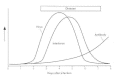
Figure 60-1

Clinical manifestations and pathogenesis of coronavirus infections. 

Figure 60-2. Immunopathogenesis of coronavirus infections.

Figure 60-2

Immunopathogenesis of coronavirus infections. 

Structure

Coronavirus virions are spherical to pleomorphic enveloped particles (Fig. 60-3). The envelope is studded with projecting glycoproteins, and surrounds a core consisting of matrix protein enclosed within which is a single strand of positive-sense RNA (Mr 6 × 10⁶) associated with nucleoprotein. The envelope glycoproteins are responsible for attachment to the host cell and also carry the main antigenic epitopes, particularly the epitopes recognized by neutralizing antibodies. OC43 also possesses a haemagglutin.

Figure 60-3. Electron micrograph showing human coronavirus 229E.

Figure 60-3

Electron micrograph showing human coronavirus 229E. Bar, 100 mn (Courtesy S.Sikotra, Leicester Royal Infirmary, Leicester, England.) 

Classification and Antigenic Types

The coronaviruses were originally grouped into the family Coronaviridae on the basis of the crown or halo-like appearance given by the glycoprotein-studded envelope on electron microscopy. This classification has since been confirmed by unique features of the chemistry and replication of these viruses. Most human coronaviruses fall into one of two groups: 229E-like and OC43-like. These differ in both antigenic determinants and culturing requirements: 229E-like coronaviruses can usually be isolated in human embryonic fibroblast cultures; OC43-like viruses can be isolated, or adapted to growth, in suckling mouse brain. There is little antigenic cross-reaction between these two types. They cause independent epidemics of indistinguishable disease.

Multiplication

It is thought that human coronaviruses enter cells, predominantly, by specific receptors. Aminopeptidase-N and a sialic acid-containing receptor have been identified to act in such a role for 229E and OC43 respectively. After the virus enters the host cell and uncoats, the genome is transcribed and then translated. A unique feature of replication is that all the mRNAs form a “nested set” with common 3′ ends; only the unique portions of the 5′ ends are translated. There are 7 mRNAs produced. The shortest mRNA codes for the nucleoprotein, and the others each direct the synthesis of a further segment of the genome. The proteins are assembled at the cell membrane and genomic RNA is incorporated as the mature particle forms by budding from internal cell membranes.

Pathogenesis

Studies in both organ cultures and human volunteers show that coronaviruses are extremely fastidious and grow only in differentiated respiratory epithelial cells. Infected cells become vacuolated, show damaged cilia, and may form syncytia. Cell damage triggers the production of inflammatory mediators, which increase nasal secretion and cause local inflammation and swelling. These responses in turn stimulate sneezing, obstruct the airway, and raise the temperature of the mucosa.

Host Defenses

Although mucociliary activity is designed to clear the airways of particulate material, coronaviruses can successfully infect the superficial cells of the ciliated epithelium. Only about one-third to one-half of infected individuals develop symptoms, however. Interferon can protect against infection, but its importance is not known. Because coronavirus infections are common, many individuals have specific antibodies in their nasal secretions, and these antibodies can protect against infection. Most of these antibodies are directed against the surface projections and neutralize the infectivity of the virus. Cell-mediated immunity and allergy have been little studied, but may play a role.
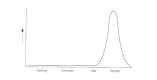
Figure 60-4. Seasonal incidence of coronavirus infections.

Figure 60-4

Seasonal incidence of coronavirus infections.

Epidemiology

The epidemiology of coronavirus colds has been little studied. Waves of infection pass through communities during the winter months, and often cause small outbreaks in families, schools, etc. (Fig. 60-2). Immunity does not persist, and subjects may be re-infected, sometimes within a year. The pattern thus differs from that of rhinovirus infections, which peak in the fall and spring and generally elicit long-lasting immunity. About one in five colds is due to coronaviruses.

The rate of transmission of coronavirus infections has not been studied in detail. The virus is usually transmitted via inhalation of contaminated droplets, but it may also be transmitted by the hands to the mucosa of the nose or eyes.

Diagnosis

There is no reliable clinical method to distinguish coronavirus colds from colds caused by rhinoviruses or less common agents. For research purposes, virus can be cultured from nasal swabs or washings by inoculating organ cultures of human fetal or nasal tracheal epithelium. The virus in these cultures is detected by electron microscopy or other methods. The most useful method for laboratory diagnosis is to collect paired sera (from the acute and convalescent phases of the disease) and to test by ELISA for a rise in antibodies against OC43 and 229E. Complement fixation tests are insensitive; other tests are inconvenient and can be used only for one serotype. Direct hybridization and polymerase chain reaction tests for viral nucleic acid have been developed and, particularly with the latter, are the most sensitive assays currently available for detecting virus .

Control

Although antiviral therapy has been attempted, the treatment of coronavirus colds remains symptomatic. The likelihood of transmission can be reduced by practising hygienic measures. Vaccines are not currently available.

Coronavirus


Coronaviruses (CoV) are a large family of viruses that cause illness ranging from the common cold to more severe diseases such as Middle East Respiratory Syndrome (MERS-CoV) and Severe Acute Respiratory Syndrome (SARS-CoV)A novel coronavirus (nCoV) is a new strain that has not been previously identified in humans.  

Coronaviruses are zoonotic, meaning they are transmitted between animals and people.  Detailed investigations found that SARS-CoV was transmitted from civet cats to humans and MERS-CoV from dromedary camels to humans. Several known coronaviruses are circulating in animals that have not yet infected humans. 

Common signs of infection include respiratory symptoms, fever, cough, shortness of breath and breathing difficulties. In more severe cases, infection can cause pneumonia, severe acute respiratory syndrome, kidney failure and even death. 


Standard recommendations to prevent infection spread include regular hand washing, covering mouth and nose when coughing and sneezing, thoroughly cooking meat and eggs. Avoid close contact with anyone showing symptoms of respiratory illness such as coughing and sneezing.

THE MEDITERRANEAN DIET


THE MEDITERRANEAN DIET IS PROVEN TO BE ONE OF THE HEALTHIEST DIETS IN THE WORLD. BUT IT’S MORE THAN THAT. IT’S A HEALTHY WAY OF EATING FOR A LONGER AND BETTER LIFE.

The Mediterranean diet is a way of eating based on the traditional cuisine of countries bordering the Mediterranean Sea. Many studies have shown that people who lived in the Mediterranean area (especially around the year 1960) were healthier and lived longer than the average.

This simply means that if someone wants to improve his health and his overall quality of life he should eat the same things that those people ate during that time.Ahe health benefits linked to the Mediterranean diet are supported by scientific evidence. It is associated with lower all-cause mortality and morbidity (disease occurrence), and has been linked to numerous health benefits, including a lower risk of cancer, cognitive disease and cardiovascular disease as well as metabolic syndrome, obesity, and type 2 diabetes”.

According to healthline.com “the Mediterranean diet is based on the traditional foods that people used to eat in countries like Italy and Greece back in 1960. Researchers noted that these people were exceptionally healthy compared to Americans and had a low risk of many lifestyle diseases”.

According to the Mayo Clinic “it is recognized by the World Health Organization as a healthy and sustainable dietary pattern and as an intangible cultural asset by the United National Educational, Scientific and Cultural Organization”.

In Greece we have two similar words but with a different meaning. The word “dieta” which means an eating schedule focused on weight loss and the word “diatrofi” from the words “dia” (through) and “trofi” (food) which means way of eating.

The Mediterranean diet is a complete, healthy way of eating focused on your well-being and not just on weight loss (though it can certainly help you lose weight).

WHAT IS THE MEDITERRANEAN DIET 

It is mostly a way of life and not a restriction of calories. The Mediterranean diet won’t make you weight your chicken or count how many almonds you’ll eat. It will train you to choose fresh, whole foods packed with nutrients and flavor, foods that will satiate your hunger and make you feel full. Foods that won’t make you feel guilty after eating them.

The goal here is not to feel deprived, but to enjoy the taste and the aroma of each bite you take. And remember: foods taste better when they’re local, on season and fresh.

EXERCISE

I know that exercise is not considered to be part of a diet, but one of the reasons the Mediterranean people were so healthy is because they did a lot of exercise. They worked in the fields most of the day and also walked long distances to get from one place to another.

I know that exercise is not always easy, especially for those of us who live in the city. But we have to start from somewhere and the progress will come with time.

Maybe you can get a bike or get off the bus one bus stop earlier and walk the rest of the way home. Maybe you can start going to the gym or download one of those free apps for working out at home. Maybe you can walk your friend’s dog or stop using the elevator. Anything is better than nothing.

NATURE

The last thing I really don’t want to neglect mentioning is being in contact with nature. I honestly feel that our modern way of life has driven us away from nature, and this comes at a great cost.

I still remember my shock one day when I realized that I hadn’t stepped on soil for over a month. Was that the reason I was feeling disconnected and not fulfilled? Probably it wasn’t the sole factor, but it certainly played its part.

Being in close contact with nature makes us value the natural, unprocessed foods more. It also reduces our everyday stress and our anxiety levels, calms our spirit, helps our body to detoxify and gives us the right perspective of things.

WHAT DO YOU EAT ON THE MEDITERRANEAN DIET?

  • Eat whole foods, fresh and seasonal.
  • Incorporate beans and legumes in your diet as often as you can. They ‘re the best source of plant-based protein.
  • Try to incorporate vegetables and greens in all of your dishes. Also, have a salad with every meal!
  • Eat fish and seafood twice a week (be mindful that today we have to be careful of the fish we eat because of the heavy metals they may contain).
  • Eat white meat once a week.
  • Eat red meat once a week or once every other week.
  • Eat fruit for dessert. Limit desserts containing sugar to once a week (maybe on Sundays).
  • Eat dairy (yogurt, feta cheese, milk) and eggs in moderation.
  • Eat products made with whole grains and whole-grain sourdough bread.
  • Wherever you can add herbs and spices do it!
  • Drink lots of water and herbal teas without sugar or sweeteners (maybe add a bit of honey).
  • Drink one glass of red wine 3 – 4 times per week (ask your doctor first).
  • Walk as much as you can and exercise 3-4 times a week.
  • Try to reduce your everyday stress by being close to nature (hug a tree!)

THE OLIVE OIL

Olive oil is the primary source of added fat in the Mediterranean diet. Olive oil provides monounsaturated fat, which has been found to lower total cholesterol and LDL (bad) cholesterol levels.

If you live in a place where olive oil is too expensive and you don’t want to spend a lot of money, I suggest buying extra virgin olive oil and use half of it and half of another vegetable oil (like sunflower or corn oil) rather than buying a refined, lower quality olive oil. In this article you can find more information about the types of olive oil.

If you can incorporate other healthy sources of fat in your eating plan like nuts, tahini, avocado, feel free to do it.

pastedGraphic.png

WHAT IS NOT ALLOWED ON THE MEDITERRANEAN DIET?

  • Added sugar: soda, candies, table sugar and many others.
  • Refined grains.
  • Trans fats (a.k.a. hydrogenated fat) like margarine.
  • Refined oils.
  • Processed meat and processed foods in general.
  • Buying bottled lemon juice and bagged salad (of course it’s better to buy a packaged salad than not buying any at all).

CAN YOU LOSE WEIGHT ON THE MEDITERRANEAN DIET?

Incorporating all those whole foods, vegetables and fresh fruit to your diet will increase your fiber intake something that can help you feel satiated with less food. Eating nutrient dense and unprocessed foods will also help you decrease the amount of calories you eat every day.

That’s why the Mediterranean diet has been linked to increased weight loss, decreased inflammation, and a lower risk of chronic disease. But keep in mind that as with every other diet, in order to lose weight you must be in a caloric deficit.

CAN YOU EAT PIZZA ON A MEDITERRANEAN DIET?

Yes you can! As long as you make a whole wheat pizza dough and use many vegetables and some feta cheese.

CAN YOU DRINK ALCOHOL ON THE MEDITERRANEAN DIET?

One glass of red wine 3 – 4 times a week is okay! But don’t forget to drink lots of water too!

CAN YOU DRINK COFFEE ON THE MEDITERRANEAN DIET?

One or two cups of black coffee per day are okay. Try to also drink some cups of herbal tea throughout the weak.

FODMAPs diet for irritable bowel syndrome


Irritable bowel syndrome (IBS) is a common gastrointestinal disorder that affects 1 out of 10 people in the United States each year.

With symptoms like cramping, diarrhea, gas and bloating, it’s no surprise that living with IBS can have a significant effect on a person’s quality of life.

Diet is one way people manage the symptoms of IBS. A common treatment approach is to avoid the foods that trigger symptoms. A new diet for IBS, developed in Australia, is showing promise in managing IBS symptoms. It’s called the low FODMAP diet.

What Is the Low FODMAP Diet?

FODMAP stands for:

Fermentable

Oligosaccharides,

Disaccharides,

Monosaccharides

And olyols.

These fermentable short-chain carbohydrates are prevalent in the diet.

  • Oligosaccharides: fructans and galactooligosaccharides (GOS)
  • Disaccharides: lactose
  • Monosaccharides: fructose
  • Polyols: sorbitol and mannitol

Researchers suggest that the small intestine does not absorb FODMAPs very well. They increase the amount of fluid in the bowel. They also create more gas. That’s because bacteria in the colon they are easily fermented by colonic bacteria. The increased fluid and gas in the bowel leads to bloating and changes in the speed with which food is digested. This results in gas, pain and diarrhea. Eating less of these types of carbohydrates should decrease these symptoms.

So far, studies have shown that a low FODMAP diet improves IBS symptoms. One study even found that 76% of IBS patients following the diet reported improvement with their symptoms.

Eat Less Of These Foods

  • Lactose
    • Cow’s milk, yogurt, pudding, custard, ice cream, cottage cheese, ricotta cheese and mascarpone
  • Fructose
    • Fruits, such as apples, pears, peaches, cherries, mangoes, pears and watermelon
    • Sweeteners, such as honey and agave nectar
    • Products with high fructose corn syrup
  • Fructans
    • Vegetables, such as artichokes, asparagus, Brussels sprouts, broccoli, beetroot, garlic and onions
    • Grains such as wheat and rye
    • Added fiber, such as inulin
  • GOS
    • Chickpeas, lentils, kidney beans and soy products
    • Vegetables, such as broccoli
  • Polyols
    • Fruits, such as apples, apricots, blackberries, cherries, nectarines, pears, peaches, plums and watermelon
    • Vegetables, such as cauliflower, mushrooms and snow peas
    • Sweeteners, such as sorbitol, mannitol, xylitol, maltitol and isomalt found in sugar-free gum and mints, and cough medicines and drops

Eat More Of These Foods

  • Dairy: Lactose-free milk, rice milk, almond milk, coconut milk, lactose-free yogurt; hard cheeses such as feta and brie
  • Fruit: Bananas, blueberries, cantaloupe, grapefruit, honeydew, kiwi, lemon, lime, oranges and strawberries
  • Vegetables: Bamboo shoots, bean sprouts, bok choy, carrots, chives, cucumbers, eggplant, ginger, lettuce, olives, parsnips, potatoes, spring onions and turnips
  • Protein: Beef, pork, chicken, fish, eggs and tofu
  • Nuts/seeds (limit to 10-15 each): Almonds, macadamia, peanuts, pine nuts and walnuts
  • Grain: Oat, oat bran, rice bran, gluten-free pasta, such as rice, corn, quinoa, white rice, corn flour and quinoa

The idea behind the low FODMAPs diet is to only limit the problematic foods in a category — not all of them. (After all, they do have health benefits.) You may tolerate some foods better than others.

Meet with a registered dietician if you are considering this diet. It’s important to make sure your eating plan is safe and healthy. He or she will have you eliminate FODMAPs from your diet. Then you gradually add the carbohydrates back in one at a time and monitor your symptoms. A food diary and symptom chart may be helpful tools.

The Bottom Line

The low FODMAP diet has shown potential in helping people with IBS. Some health professionals believe it’s too restrictive. Proponents of the diet report that people stick with it because of how it improves their quality of life.

Inguinal hernia


An inguinal hernia occurs when tissue, such as part of the intestine, protrudes through a weak spot in the abdominal muscles. The resulting bulge can be painful, especially when you cough, bend over or lift a heavy object.

An inguinal hernia isn’t necessarily dangerous. It doesn’t improve on its own, however, and can lead to life-threatening complications. Your doctor is likely to recommend surgery to fix an inguinal hernia that’s painful or enlarging. Inguinal hernia repair is a common surgical procedure.

Symptoms

Inguinal hernia signs and symptoms include:

  • A bulge in the area on either side of your pubic bone, which becomes more obvious when you’re upright, especially if you cough or strain
  • A burning or aching sensation at the bulge
  • Pain or discomfort in your groin, especially when bending over, coughing or lifting
  • A heavy or dragging sensation in your groin
  • Weakness or pressure in your groin
  • Occasionally, pain and swelling around the testicles when the protruding intestine descends into the scrotum

Signs and symptoms in children

Inguinal hernias in newborns and children result from a weakness in the abdominal wall that’s present at birth. Sometimes the hernia will be visible only when an infant is crying, coughing or straining during a bowel movement. He or she might be irritable and have less appetite than usual.

In an older child, a hernia is likely to be more apparent when the child coughs, strains during a bowel movement or stands for a long period.

Signs of trouble

If you aren’t able to push the hernia in, the contents of the hernia may be trapped (incarcerated) in the abdominal wall. An incarcerated hernia can become strangulated, which cuts off the blood flow to the tissue that’s trapped. A strangulated hernia can be life-threatening if it isn’t treated.

Signs and symptoms of a strangulated hernia include:

  • Nausea, vomiting or both
  • Fever
  • Sudden pain that quickly intensifies
  • A hernia bulge that turns red, purple or dark
  • Inability to move your bowels or pass gas

When to see a doctor

Seek immediate care if a hernia bulge turns red, purple or dark or if you notice any other signs or symptoms of a strangulated hernia.

See your doctor if you have a painful or noticeable bulge in your groin on either side of your pubic bone. The bulge is likely to be more noticeable when you’re standing, and you usually can feel it if you put your hand directly over the affected area.

Causes

Some inguinal hernias have no apparent cause. Others might occur as a result of:

  • Increased pressure within the abdomen
  • A pre-existing weak spot in the abdominal wall
  • Straining during bowel movements or urination
  • Strenuous activity
  • Pregnancy
  • Chronic coughing or sneezing

In many people, the abdominal wall weakness that leads to an inguinal hernia occurs at birth when the abdominal lining (peritoneum) doesn’t close properly. Other inguinal hernias develop later in life when muscles weaken or deteriorate due to aging, strenuous physical activity or coughing that accompanies smoking.

Weaknesses can also occur in the abdominal wall later in life, especially after an injury or abdominal surgery.

In men, the weak spot usually occurs in the inguinal canal, where the spermatic cord enters the scrotum. In women, the inguinal canal carries a ligament that helps hold the uterus in place, and hernias sometimes occur where connective tissue from the uterus attaches to tissue surrounding the pubic bone.

Risk factors

Factors that contribute to developing an inguinal hernia include:

  • Being male. Men are eight times more likely to develop an inguinal hernia than are women.
  • Being older. Muscles weaken as you age.
  • Being white.
  • Family history. You have a close relative, such as a parent or sibling, who has the condition.
  • Chronic cough, such as from smoking.
  • Chronic constipation. Constipation causes straining during bowel movements.
  • Pregnancy. Being pregnant can weaken the abdominal muscles and cause increased pressure inside your abdomen.
  • Premature birth and low birth weight.
  • Previous inguinal hernia or hernia repair. Even if your previous hernia occurred in childhood, you’re at higher risk of developing another inguinal hernia.

Complications

Complications of an inguinal hernia include:

  • Pressure on surrounding tissues. Most inguinal hernias enlarge over time if not repaired surgically. In men, large hernias can extend into the scrotum, causing pain and swelling.
  • Incarcerated hernia. If the contents of the hernia become trapped in the weak point in the abdominal wall, it can obstruct the bowel, leading to severe pain, nausea, vomiting, and the inability to have a bowel movement or pass gas.
  • Strangulation. An incarcerated hernia can cut off blood flow to part of your intestine. Strangulation can lead to the death of the affected bowel tissue. A strangulated hernia is life-threatening and requires immediate surgery.

Prevention

You can’t prevent the congenital defect that makes you susceptible to an inguinal hernia. You can, however, reduce strain on your abdominal muscles and tissues. For example:

  • Maintain a healthy weight. Talk to your doctor about the best exercise and diet plan for you.
  • Emphasize high-fiber foods. Fruits, vegetables and whole grains contain fiber that can help prevent constipation and straining.
  • Lift heavy objects carefully or avoid heavy lifting. If you must lift something heavy, always bend from your knees — not your waist.
  • Stop smoking. Besides its role in many serious diseases, smoking often causes a chronic cough that can lead to or aggravate an inguinal hernia.

Foods reducing Arthritis Pain


Remember, there’s no magic food,” stresses Frechman.  But growing evidence suggests that following a healthy diet and adding in specific foods and spices could help fight inflammation and joint pain.

  • Broccoli, Brussels sprouts and cabbage. These veggies are part of the cruciferous family, and they are full of a compound called sulforaphane, which helps slow cartilage damage in joints due to osteoarthritis, according to a 2013 study involving mice. Admittedly, it’s an early study. But veggies are always a healthy choice. Try adding broccoli, Brussels sprouts, cabbage, kale or cauliflower to your salad or stir-fry.
  • Fatty fish. Fatty fish like salmon, tuna, trout and mackerel are rich in omega-3 fatty acids, which help fight inflammation. Try adding fish to your diet a couple of times a week. If you’re not a big fan of fish, ask your doctor about taking an omega-3 supplement.
  • Garlic. Garlic is a member of the allium family—which also includes onions and leeks. These items contain a compound called diallyl disulfide that may help with a number of diseases—including arthritis. “This compound may have some effect in limiting cartilage-damaging enzymes,” says rheumatologist Scott Zashin, MD, clinical professor at the University of Texas Southwestern Medical School in Dallas.
  • Tart cherries. Some people with arthritis have found relief from products made from tart cherries. The ingredient in cherries that helps with joint symptoms is the same one that gives this fruit its red color—anthocyanin. A 2013 study published in Osteoarthritis and Cartilage found that subjects who drank tart cherry juice had improvements in the pain and stiffness of OA.
  • Turmeric. One of the best-researched inflammation fighters isn’t a food at all, but a spice. Tumeric contains a compound called curcumin. A 2012 review published in the International Journal of Molecular Sciences said that “curcumin could be beneficial in the management of chronic inflammatory-related joint disease,” but authors warned that there is a considerable lack of data regarding side effects and safety. The compound has, however, been used for centuries in India to ward off inflammatory diseases. You’ll find this yellow spice in Indian cuisines—particularly curries.
  • Vitamin CAntioxidants in vitamin C may slow the progression of OA, research finds. A 2011 study from the University of South Florida reported that people who took vitamin C supplements were 11 percent less likely to develop knee OA than those who didn’t take the supplements. You can get vitamin C from strawberries, kiwi, pineapple, or cantaloupe. However, Frechman warns against taking supplements with much higher doses than 65 to 85 milligrams, because in large doses vitamin C can increase the risk of kidney stones.

Chronic Pain


Physical pain is an inescapable part of life no matter how healthy you are. For most of us, pain is temporary, for example when we experience a headache or a sports injury. And while that is rarely a consolation in the moments when we feel it, acute pain serves a valuable function, says Dr. Marcia D. Wolf, M.D., Medical Director at the Mid Atlantic Pain Medicine Center and Clinical Instructor at Johns Hopkins University, School of Medicine. Pain acts as a signal of tissue damage initially. “Once the tissue-damaging event has stopped, the brain dampens the pain signal so you are not continuously aware of it — and it stops hurting,” says Dr. Wolf.

But with chronic pain, “the signal goes haywire and something hijacks the normal response,” says Dr. Wolf. “Chronic pain is the rewiring and amplification of a signal that should have been shut off.” Statistics on the subject are sobering. A report from the Centers for Disease Control and Prevention found that one in five U.S. adults are living with chronic pain. “Pain becomes chronic when it has persisted beyond its usefulness,” explains Dr. Wolf. “We used to say that if it continued for three months it was chronic. Now we know it can be chronic in 10 days.”

What’s more, chronic pain can be exacerbated by stress, both emotional and physiological. “It’s a chicken and egg scenario, or a continual loop,” Dr. Wolf tells Thrive. “Once you have it, the more you agonize over it, the more it can intensify.” 

Chris Stake, who has experienced chronic pain for almost two decades, knows this intensity well. Stake, 48, developed osteoarthritis of the hip in her early 30s. “It got so bad, I was actually crawling up the stairs of my house,” she says. A hip replacement has alleviated the osteoarthritis, but now Stake suffers from migraines. “I feel like there’s a tight rubber band around my head that I just want to cut off to release the pressure, and I get nausea too.” 

Stake believes her temperament and positive attitude have helped her to cope. “I look for solutions and how can I address the problem so I don’t feel defeated,” she says. Along with identifying and avoiding triggers for her migraines, including alcohol, incorporating small Microsteps into her daily life, such as making time for exercise and meditation, has provided some relief.

Dr. Wolf is an advocate of these small, everyday behaviors that can have a huge impact. “I tell patients that stress is what turns up the volume on the chronic pain.” If you can get control of the stress, you may also be able to turn the volume down on the pain so you won’t feel as bad. To help, here are a few science-backed strategies you can try.

Prioritize sleep

Quality sleep needs to be a top priority for people with chronic pain, Dr. Wolf tells Thrive. Acknowledging that sleep may prove to be more of a challenge for chronic pain sufferers, her advice is to focus on the things you can control — things that really make a difference. For instance, try to avoid caffeine in the afternoon and evening; make sure the room temperature is comfortable (not too warm and not too cold); consider an ice pack or a heating pad in bed. (Just make sure to use a heating pad that is safety-certified and is equipped with an auto shut-off function). You could also experiment with different pillows for support. “If you wake up and feel like you need to get up and move around, that’s OK,” Dr. Wolf says. “I also recommend people with chronic pain get tested for sleep apnea, because we know that sleep disorders can worsen the pain response.”

Be mindful  

Mindfulness can be a useful tool for dealing with chronic pain. “Mindfulness gives me a sense of empowerment, so I feel I have some control over my health. And it takes away the stress that contributes to my migraines,” says Stake. Dr. Wolf believes the power of mindfulness lies in its ability to “take your attention away from the body part that hurts in order to stay present in what you’re doing, whether that’s folding laundry or walking in nature.” There’s no single right way to practice mindfulness, and Dr. Wolf has one unusual suggestion: “I recommend to my patients with chronic pain that they consider buying a fish tank, or simply look at marine life on the TV screen. Studies have shown that watching fish helps people relax.”

Use your breath

Breathing exercises can’t be underestimated when it comes to stress and pain relief, says Dr. Wolf. “Get into a comfortable position and focus on your breath. Inhale deeply, with a slight hold, followed by a concentrated, prolonged exhale as you imagine releasing the pain from the body and relaxing the muscles.” Do this simple technique as often as you like for at least a couple of minutes, adds Dr. Wolf.

Exercise

There’s a common myth that movement is off-limits for people who experience pain, but low or no impact exercise can often be beneficial. “I’m a huge proponent of people with chronic pain getting into water — especially warm water, such as a heated swimming pool,” says Dr. Wolf. “Just float, or walk, or stand in the water.” Low impact Zumba or any gentle dance class is a good possibility for many people, continues Dr. Wolf, because there’s constant motion combined with the mood-boosting effects of music. Stretching is great too, but Dr. Wolf advises people to avoid yoga, unless they are experienced or have their doctor’s OK first. “Certain poses can be stressful. I want people to stretch their muscles, not their tendons,” she says.

Cut yourself some slack 

Dr. Wolf points out that there is a balance between committing to taking steps to feel better and being gentle with yourself. “If you had a horrible day, give yourself permission to be human. It’s OK to take a break from exercise, for example, and not feel guilty. Just get back on track as soon as you can.” 

Measles making a deadly comeback across Africa


measles-incidence-rate-map-240


Once-rare measles outbreaks are returning to many African countries, where low vaccination coverage leaves many vulnerable.

About 44% of the world’s 2019 cases, as of September, were recorded in Africa – including a major outbreak in Madagascar with more than 150,000 cases and 1,000 deaths. In some places, health workers are in short supply and maintaining the cold chain is a challenge; elsewhere, vaccine misconceptions play a part.

In Uganda, a 2017 outbreak surprised health officials, given the country’s vaccine coverage – though that falls shy of reachaching herd immunity. Officials surmise many children got first doses but missed out on boosters.

Measles is having a deadly resurgence across Africa, where, as of September, about 44% of this year’s cases worldwide have been recorded. That’s due in large part to a massive outbreak in the island nation of Madagascar off the coast of Mozambique, where more than 150,000 cases have been reported and more than 1,000 people have died due to low vaccination rates and a vaccine shortage once the outbreak took hold.

In Uganda, vaccination rates are higher, but thinly stretched health budgets, mistrust of vaccines and complacency among people who think measles is a disease of the past have helped lead to the outbreaks.

“For the last 15, 20 years, medical students had never even seen measles,” said Dr. Edison Arwanire Mworozi, a pediatrician at Mulago who sits on the government’s immunization steering committee. “[People] never thought it would come back. They thought, ‘If my child is healthy, why should I inject him?’”

EMPATHY

In this digital age, there is a big disconnect between leaders and the people they lead. Many managers think they are doing a great job but when you ask the people they lead, it’s quite the opposite. Many employees feel unappreciated and undervalued. Employee engagement is at an all time low. What seems to be missing link? Empathy. 

Many organizations are focused on achieving goals no matter what the cost to employees. If we treat people only as the means to an end, we will never have their loyalty. Treat your people right. Great leaders are concerned about getting the job done as well as the well-being of those under their care. It doesn’t mean being overly attentive or soft but demonstrate that you value people. Without empathy, you can’t build a team, inspire followers or elicit loyalty. Leaders that possess this trait always make time for people.

Nobody cares how much you know, until they know how much you care”. – Theodore Roosevelt

Empathy and listening go hand in hand. Why? Because listening shows you care. You can’t show empathy if you do not listen. Good listening skills is fast becoming an endangered species due to information overload and shortened attention span. The quality of our listening determines the quality of our influence. Employees want to be heard and they want to be respected. Listening transmits that kind of respect and builds trust.

If you want to increase employee engagement and loyalty. Pretty simple! Show people that you genuine care! Sometimes it’s the little things we do that counts the most. It’s the simple things people remember. The thoughtful gesture, the kind word, the much needed support. It’s doesn’t cost much to show employees you genuinely care, but it can make the biggest difference in keeping them loyal, happy and engaged.

Prostate Cancer Treatment Goes Nanogold


Christmas decoration, close-up full frame

One in nine men will be diagnosed with prostate cancer in their lifetime, making it the most common nonskin cancer in the United States. Traditionally, therapies to treat prostate cancer have not been as specific as they could be, often leading to unwanted side effects and damage to the sensitive surrounding tissue. Now, a new study from investigators at Mt. Sinai’s Icahn School of Medicine provides new data that biocompatible gold nanoparticles, designed to convert near-infrared light to heat have been shown to safely and effectively ablate low- to intermediate-grade tumors within the prostate.

Findings from the new study were published recently in PNAS through an article titled “Gold nanoshell-localized photothermal ablation of prostate tumors in a clinical pilot device study.” This treatment could offer patients a targeted therapy option that would preserve critical structures within the prostate, thus avoiding side effects associated with whole-gland treatment such as prostatectomies.

Removal or other whole-gland treatment of the prostate carries risks of urinary incontinence and erectile dysfunction. However, technological advances have provided clinicians with options for focal therapies with fewer complications.

In the current study, researchers tested the effectiveness of AuroLase® Therapy, a treatment from medical device company Nanospectra Biosciences that is based on technology invented at Rice University. The technique was used in the clinical trial to target and treat the prostate cancer cells using a custom-built MR US fusion guided platform in collaboration with Philips Healthcare. AuroLase uses gold-silica nanoshells (GSN), particles invented that is composed of a silica core and a gold shell with a diameter of 150 nm. AuroShells are designed to absorb energy from near-infrared light and convert it to heat, resulting in selective hyperthermic cell death, without affecting adjacent non-tumorous tissue. The treatment was effectively demonstrated in previous cell studies and animal models. Following treatment, the particles are cleared through the liver, while some remain sequestered in the liver and spleen. There are no known side effects.

“Gold-silica nanoshells infusion allows for a focused therapy that treats the cancer, while sparing the rest of the prostate, thus preserving a patient’s quality of life by reducing unwanted side effects, which could include erectile dysfunction and/or the leakage of urine,” explained lead study investigator Ardeshir Rastinehad, DO, associate professor of urology, and radiology, at the Icahn School of Medicine at Mount Sinai.

Sixteen men aged 58 to 79 with low- to intermediate-grade prostate cancer (Gleason score of 4+3) received GSN infusion. All were diagnosed and treated at using a targeted biopsy technique called magnetic resonance-ultrasound fusion imaging, which uses MRI technology to extract a tissue sample directly from the tumor. Patients underwent GSN infusion and high-precision laser ablation and received an MRI of the prostate 48–72 hours after the procedure, MRI-targeted fusion biopsies at 3 and 12 months, and a standard biopsy at 12 months. Patients were discharged on the same day as the procedure after several hours of monitoring.

Amazingly, GSN-mediated focal laser ablation was successful in 87.5% of lesions treated at one year of follow-up. The goal of researchers was to find an eradication of cancer cells during a biopsy.

“Mount Sinai’s interventional urology program is research-driven and offers patients minimally invasive treatment therapies that improve quality of life,” said Ash Tewari, MD, chair of the department of urology at the Mount Sinai Health System and professor of urology at the Icahn School of Medicine at Mount Sinai. “Dr. Rastinehad’s gold nanoparticle research shows that patients are not only benefiting from this treatment but also experiencing minimal side effects.”

css.php